
ONBOARDING PORTAL
The Onboarding Experience (OX) initiative was created to transform how CHRISTUS Health welcomes new associates across a wide range of roles — from physicians and nurses to technicians and corporate staff. Historically, onboarding relied heavily on manual, fragmented workflows that varied by department and role. This inconsistency created confusion for new hires and inefficiencies for HR teams.
As the UX/UI designer on the project, I partnered closely with the research and feedback team to understand user sentiment, uncover pain points, and identify opportunities for improvement. Through research, process mapping, and iterative design, we created a centralized digital onboarding portal that delivers a seamless, associate‑centered experience from offer acceptance through the first 30 days.
My Role: UX Research and UI Design
Skills Used: User interviews, Usability analysis, Wireframing, Figma design, User Testing
Project Overview
Problem Statement
CHRISTUS Health needed a unified onboarding solution that could support diverse job roles with different requirements, timelines, and compliance needs. The existing onboarding process was:
-
Manual and inconsistent, relying on emails, PDFs, and spreadsheets
-
Difficult for new hires to navigate, especially those in clinical roles with complex credentialing
-
Time‑intensive for HR, requiring repeated follow‑ups and manual tracking
-
Not personalized, leading to confusion about what tasks applied to which roles
These challenges resulted in delays, frustration, and a fragmented first impression for new associates.
The goal was to design a digital onboarding portal that streamlined workflows, automated key touchpoints, and delivered a personalized, intuitive experience for every new hire.
Research & Discovery
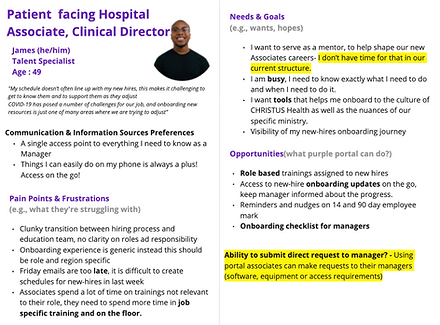
Our team conducted a mix of 1:1 interviews and focus groups with nurses, physicians, clinical staff, corporate employees, and managers to understand their onboarding experiences and role‑specific challenges. These conversations revealed gaps in clarity, inconsistent communication, and system disconnects that shaped how different users navigated the process. I paired these insights with a deep analysis of all existing onboarding systems and workflows, mapping how each tool interacted across departments. This research not only exposed key pain points and inefficiencies but also directly informed the development of our personas, which became the foundation for designing a more intuitive, role‑aware onboarding experience.


Process Mapping
Using research and systems analysis, I created a detailed current‑state process map that highlighted:
-
Redundant steps
-
Manual handoffs
-
Communication gaps
-
Role‑specific bottlenecks
-
Opportunities for automation
This map became the foundation for identifying improvement areas and designing the future‑state experience.
.jpg)
UI DESIGNS
The design phase focused on creating a new portal that addressed the shortcomings of the existing system. Key design considerations included:
-
A centralized dashboard for all onboarding tasks
-
Personalized task lists based on role
-
Automated email and text communications
-
Clear progress tracking
-
A welcoming, branded interface aligned with CHRISTUS Health’s identity
-
Designs that respected ServiceNow platform limitations
I collaborated closely with developers to ensure feasibility and to adjust designs where platform constraints required trade‑offs.
Updated Email Communication UI
Web UI

Mobile UI

Screen Designs


Impact & Outcomes
The redesigned onboarding portal received strong positive feedback from both new hires and HR teams. Key improvements included:
-
Centralized onboarding experience, reducing confusion and scattered communication
-
Role‑specific personalization, ensuring relevance for each associate
-
Automated reminders, reducing HR workload
-
Improved clarity and transparency, especially for clinical roles
-
A more welcoming and connected experience, strengthening early engagement
Let’s
Connect
